
Stop Opening Workshops With Icebreakers (And What to Do Instead)
7 alternatives to icebreakers, and how to choose the right one every time.

“If you were a biscuit, what biscuit would you be?”
You’ve been in that room. Fourteen people sitting in a horseshoe, half of them still holding their coffee, silently calculating how long this is going to take.
Someone says “Hobnob” and gets a polite laugh. Someone says “Bourbon” and explains why.
The facilitator nods along and nobody learns anything useful about the work ahead.
Ten minutes later, the actual session starts.
And the room has already been trained. Trained to perform, not to think. Trained to be an audience, not participants.
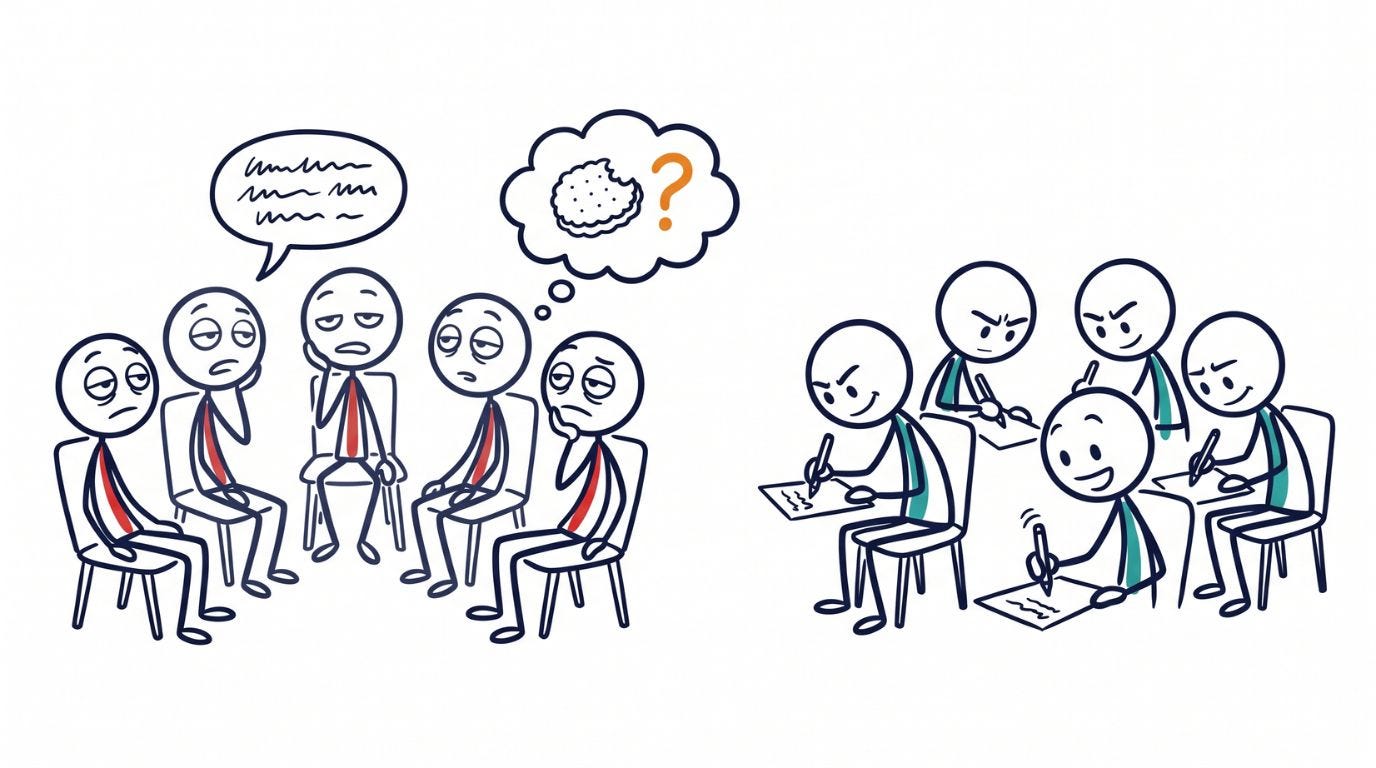
The first five minutes of a workshop set the pattern for everything that follows.
If you start by asking people to share fun facts, you’ve told them this is a session where the facilitator talks, the group responds on cue, and the work can wait.
If you start by getting them working on the real problem, you’ve told them the opposite.
This piece is about the opposite.
Seven openers, each one expanded with depth.
Why it works. When to use it. What to watch for.
1. The commitment question
“What’s the one thing you want solved by the time you leave today?”
Everyone writes. 60 seconds. Before you’ve delivered anything, every person in the room has put a stake in the ground about what they came for.
Now you know what the room cares about, and they’ve invested in the outcome before slide one.
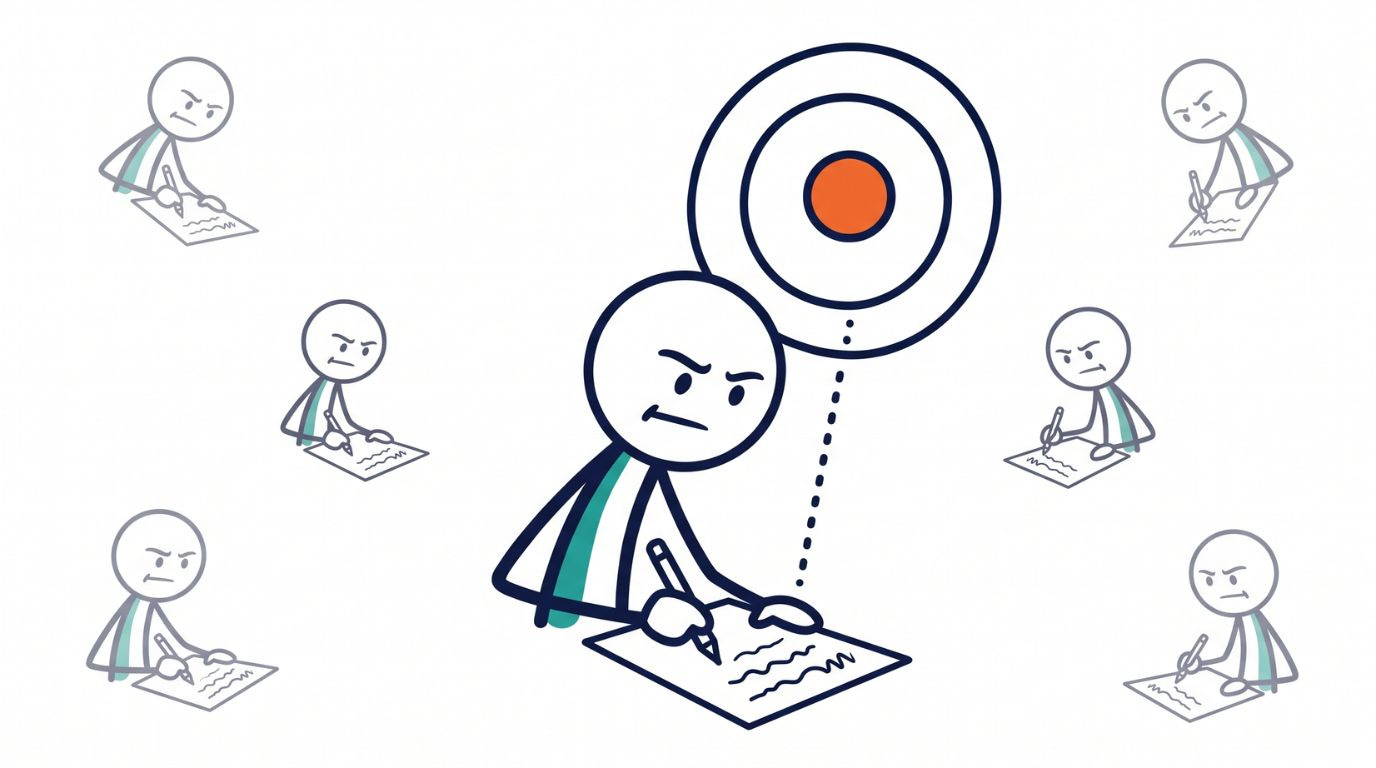
This opener shifts ownership.
The moment someone writes down what they want from the session, they’re no longer a passive receiver of whatever you planned.
They have a benchmark and they’ll measure the session against it whether you ask them to or not.
But what happens when 14 people write 14 different things, and your session can only address a handful of them?
This separates prepared facilitators from reactive ones. You don’t ignore it.
The fastest way to lose a room is to ask people what they care about and then pretend you didn’t hear their answers.
Collect the responses. Group them visibly. Name the ones that fall inside today’s session and the ones that fall outside it.
For the ones outside: “These are real and they matter. They’re outside today’s scope, but I’m going to capture them and make sure they go somewhere.”
Then actually do it. Send the list to the workshop sponsor within 48 hours with a recommendation for what to do with each one.
You chose to surface what the room actually needs. Sometimes it reveals a gap between what the sponsor wanted and what the team needs.
That gap is useful information.
2. The scale check
“On a scale of 1 to 5, how confident are you that this team handles conflict well? Hold up your number.”
Five seconds and you have a room full of visible data.
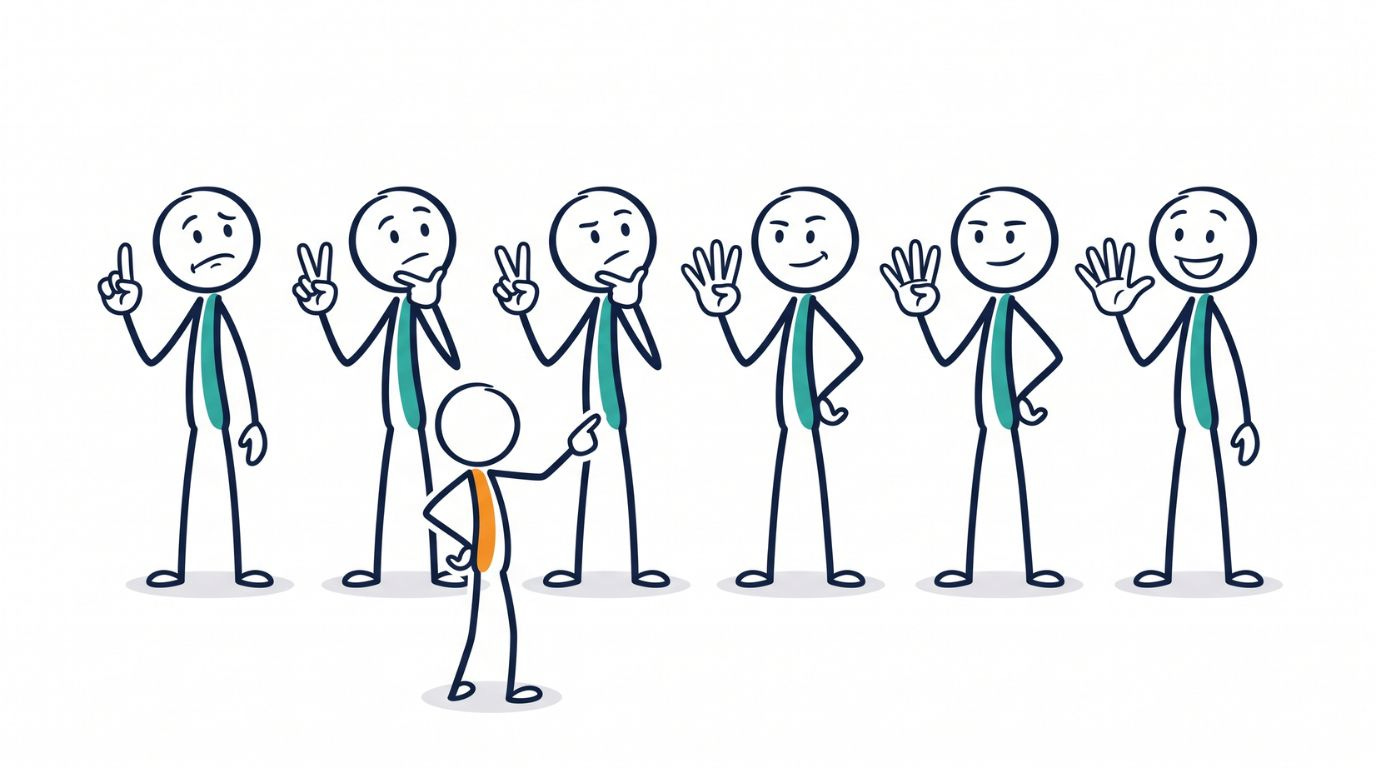
A room of 4s and 5s is a different session than a room with a mix of 2s and 5s.
And that mix, held up on everyone’s fingers for the whole group to see, creates a conversation that would have taken 30 minutes of careful facilitation to surface organically.
The power is in the follow-up. “I see some 2s. Tell me more.”
You’re not asking who’s struggling. You’re asking the room to explain a number they’ve already committed to publicly.
That’s a much easier entry point than “Who wants to talk about what’s not working?”
The scale check works particularly well when you’re running a session where the group thinks they’re already on the same page.
They’re rarely on the same page.
Seeing a spread of 2 to 5 makes it visible. The numbers create a fact in the room that everyone has to acknowledge.
One thing to watch: pick your question carefully. “How confident are you in our team communication?” will get you polite 3s and 4s.
“How confident are you that someone on this team would tell you if your idea was bad?” gets you honest numbers.
The more specific and slightly uncomfortable the question, the more useful the data.
3. The silent write
“Write down the one thing about [topic] that frustrates you most. You have 90 seconds.”
This is the opener I use most, and based on the comments when I shared these on LinkedIn, it’s the one others gravitate towards too.
No talking. No sharing yet. Just people committing a thought to paper before group pressure kicks in.
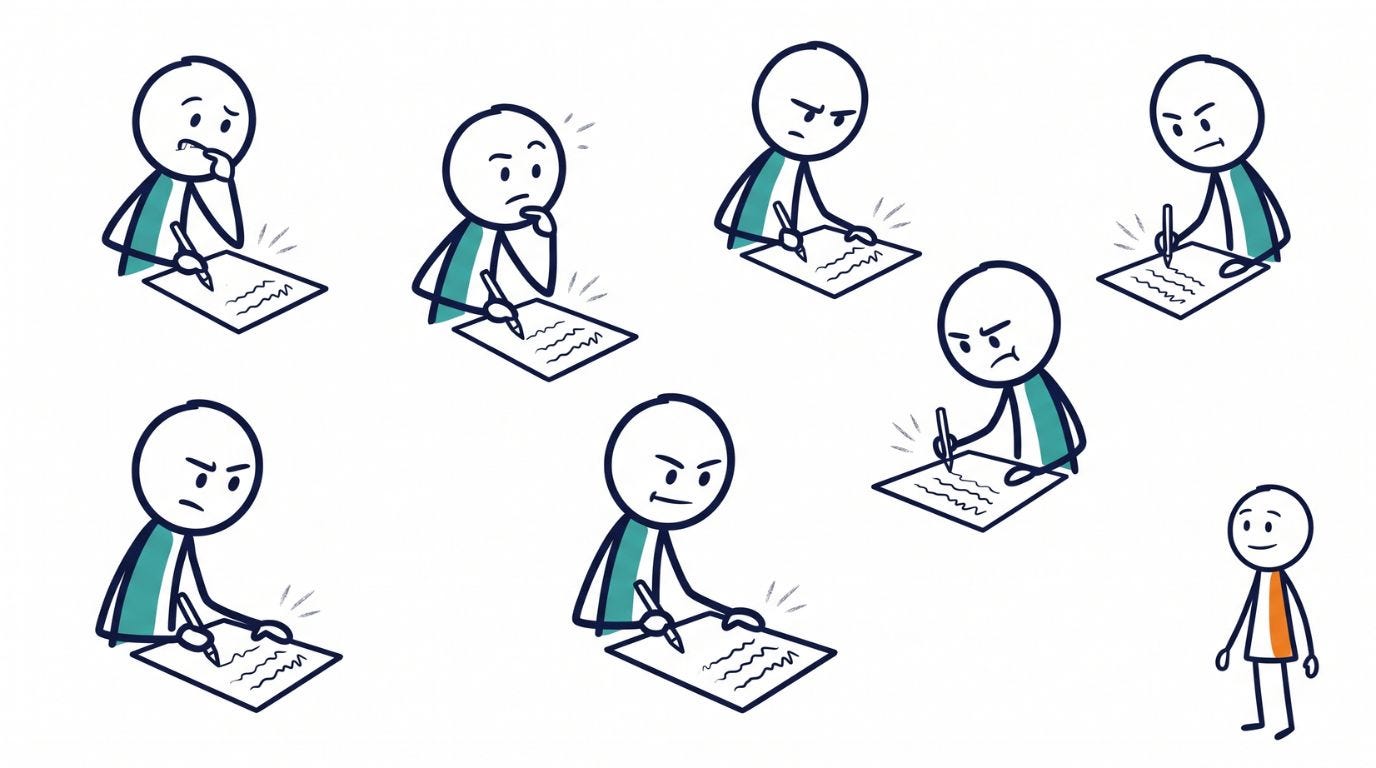
When you open with a group discussion, whoever speaks first sets the frame. Their answer becomes the reference point.
Everyone who speaks after is reacting to that first contribution rather than sharing their own independent thought.
Psychologists call this anchoring.
The silent write breaks that.
Every person commits their own view to paper before anyone speaks. By the time you move to pairs or group discussion, you’ve got 14 independent perspectives instead of 14 reactions to whoever was brave enough to go first.
The silent write is particularly effective for introverts who need time to reflect and form ideas before being asked to contribute.
But it raises the quality of thinking for everyone.
Extroverts benefit too, because they’re responding to considered positions rather than filling silence with whatever comes to mind first.
A practical detail: the question you write on the board has to be specific enough that people can answer it in 90 seconds.
“What frustrates you most about how this team makes decisions?” works.
“What are your thoughts on teamwork?” doesn’t.
One invites a specific, honest response. The other invites a paragraph of corporate gobbledygook.
4. The bold statement
Open with a claim that creates tension.
“Most teams think they have a communication problem. They don’t. They have a trust problem.”
Then: “Agree or disagree? Talk to the person next to you. 2 minutes.”
This is the scariest opener on the list. It’s also the most effective.
The room splits immediately. Some people nod. Some people frown.
Now you’ve got tension, and tension is energy.
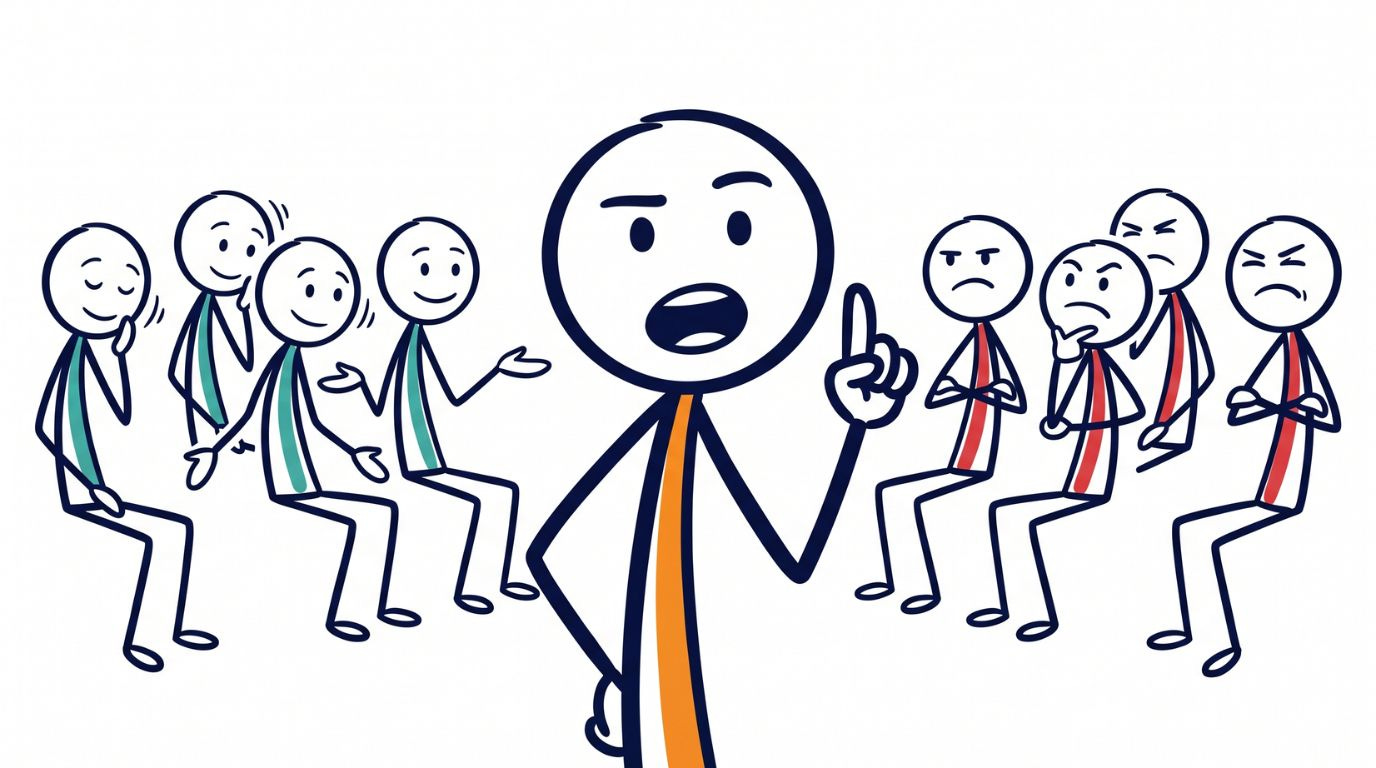
Pair them up to debate it for two minutes and the session is alive before you’ve delivered a single thing.
The bold statement works because it gives people something to react to instead of something to absorb.
Most workshop openings are passive.
You listen, you nod, you wait for the facilitator to get to the good stuff.
A bold claim forces a response.
Even if someone disagrees with you, they’re now engaged with the topic.
But what do you do in low-trust environments where people are likely to echo their leader rather than share their real opinion?
Two things help. First, the pair format. People say things to one person they’ll never say to a room.
If the CEO is in the session, pair them with someone senior enough to push back.
Second, make the statement genuinely debatable. “Most teams think they have a communication problem. They don’t. They have a trust problem.”
That’s a real position, not a trick question. Reasonable people disagree on it. That makes it safe to take either side.
The bold statement works best when psychological safety has already been established.
If you’re working with a group for the first time and you don’t know the room, this one carries more risk than the silent write or the pair share.
Read the room before you pick it.
5. The pair share
“Turn to the person next to you. One thing you’re hoping this session addresses. 2 minutes.”
Pairs are safe. People say things to one person they won’t say to a room of twelve.
Inside two minutes, every single person has spoken and the room is alive.
This is the lowest-risk opener on the list.
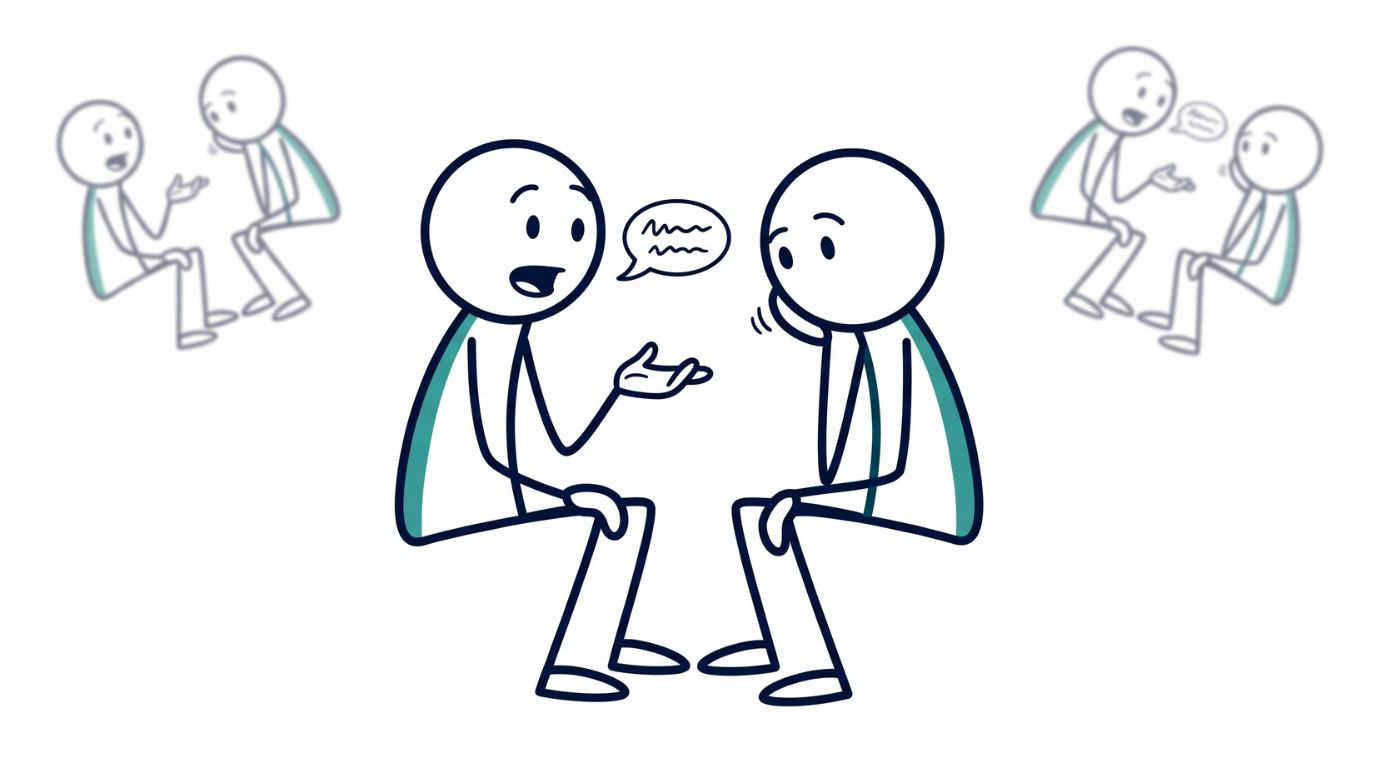
For groups where you don’t know the level of trust, where the topic is sensitive, or where the culture values harmony over open debate, the pair share gives you energy and participation without asking anyone to expose themselves publicly.
In cultures where harmony is highly valued, openers that ask people to take sides publicly can land badly.
The bold statement and the room poll both push towards visible disagreement, which feels natural in some settings and uncomfortable in others.
The pair share, the silent write, and the commitment question all work well across cultural contexts because they invite individual reflection rather than public confrontation.
The pair share also works as a building block.
Start with pairs, then merge into groups of four, then report out to the room.
Each step raises the exposure level gradually.
By the time you reach the full group discussion, even the quietest participants have momentum because they’ve already said it twice.
6. The room poll
“Stand up. Left wall if our biggest challenge is alignment. Right wall if it’s execution. Back wall if it’s something else.”
Movement. Decision-making. Visible data.
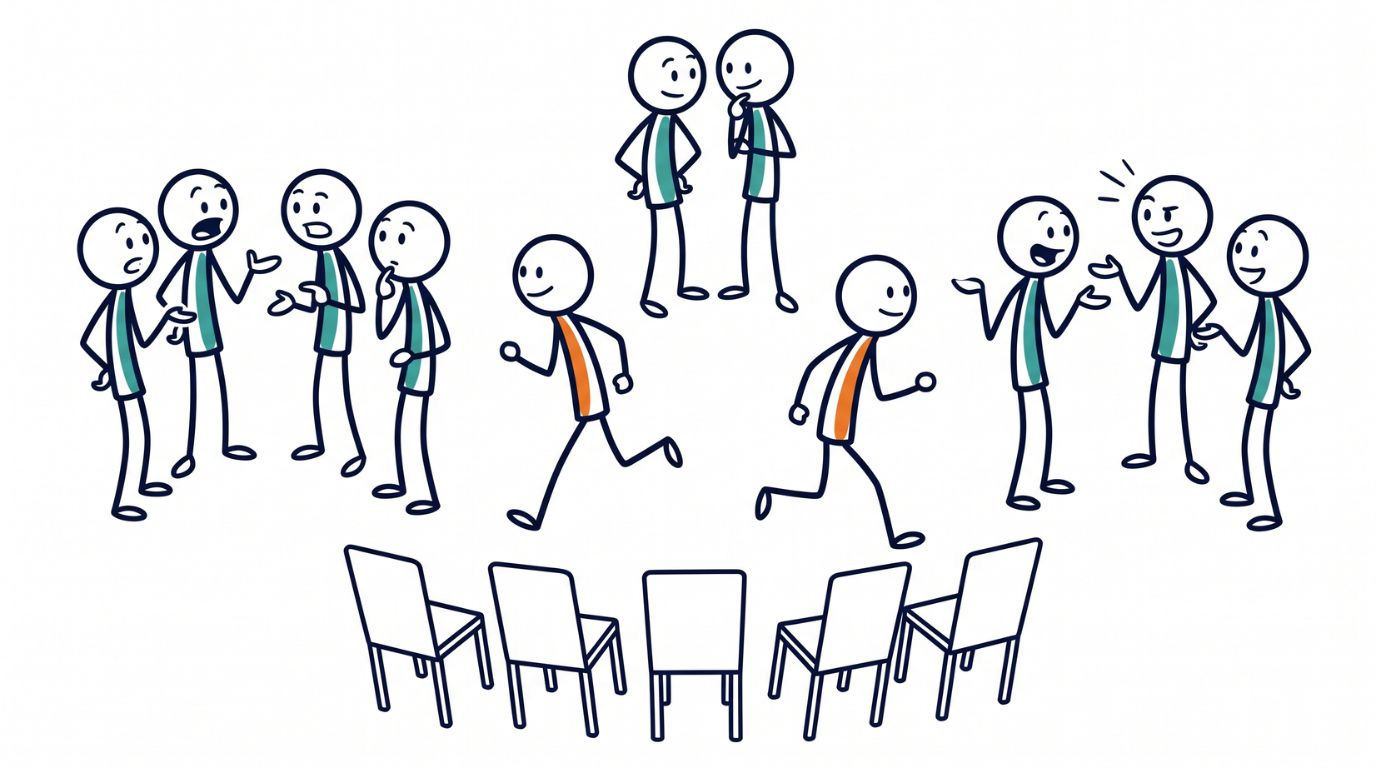
The room is on their feet and clustered by opinion within 60 seconds.
Once someone stands up and walks to a wall to declare their position, they can’t go back to being a passive observer.
Their body has committed before their brain catches up.
The room poll works because it’s physical.
Sitting in a chair and raising your hand is one thing.
Getting up, walking across a room, and standing with a group of people who share your view is a completely different level of commitment.
And the visual data is immediate. Everyone can see the clusters. Everyone can see where the room’s weight sits.
You don’t need to tally votes or read out survey results. The room is the survey.
The follow-up is where the real value sits.
Ask each cluster why they chose that wall.
“I see most of the room is on the execution side. What’s going on?”
Now you’ve got a group who physically committed to a position explaining their reasoning to the rest of the room.
That’s a different quality of conversation than “So, who wants to start?”
You can combine the silent write with a physical vote.
Private thinking first, then public commitment through movement.
That’s a strong sequence because people have already formed their own view before they’re asked to act on it.
You get independent thinking and visible data in under four minutes.
One thing to watch for groups where psychological safety is low. Asking people to physically walk to a position on a sensitive topic puts them on display.
If you’re not sure whether the group feels safe disagreeing with each other openly, the silent write or pair share is a better starting point.
7. The “what do you already know?” round
“Before I share anything, what does this group already know about [topic]? One sentence each.”
This opener builds credibility with senior groups.
These people have been doing this work for 20 years. They don’t want to be taught from scratch.
When you ask what they already know, you’re telling them you respect their experience and plan to build on it, not ignore it.
It also gives you intelligence.
If the room already knows 80% of what you planned to cover, you can skip the basics and spend the time where it adds value.
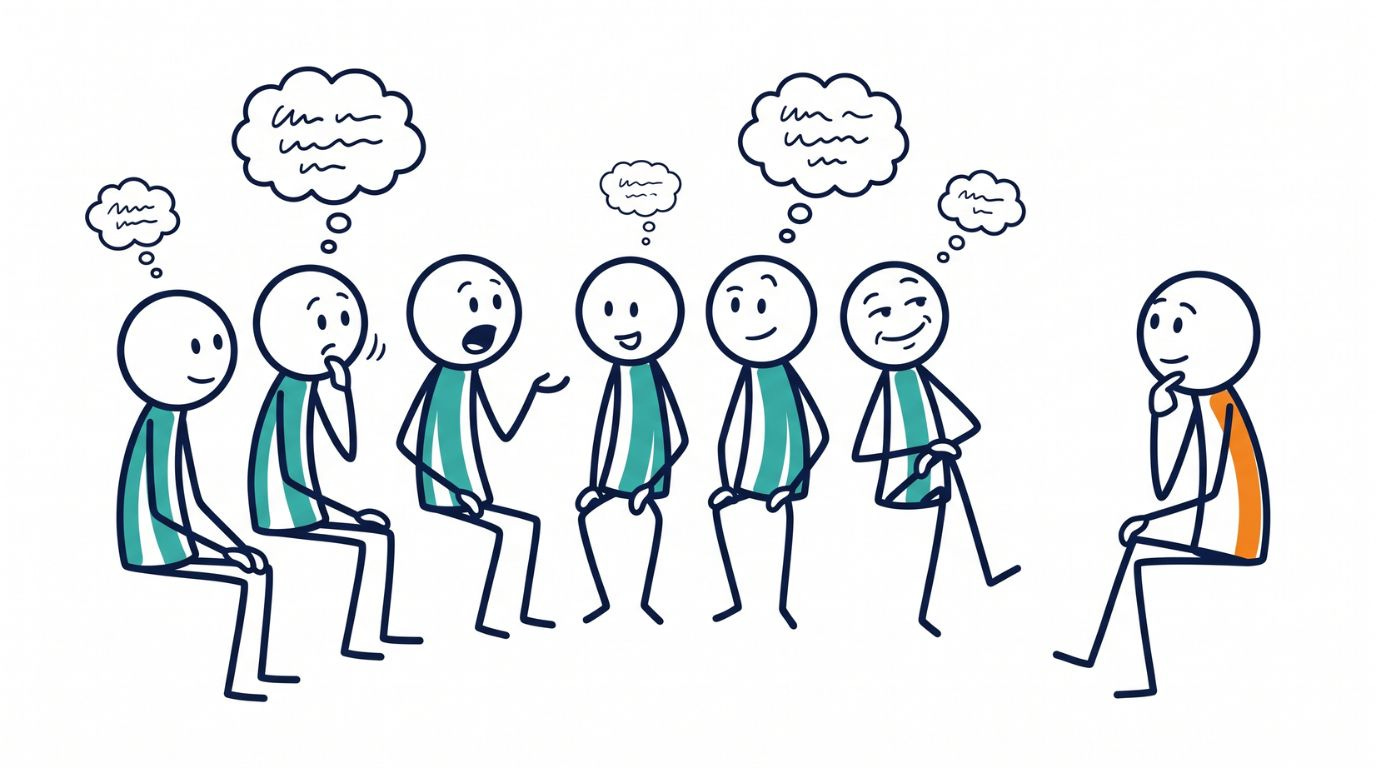
I’ve seen facilitators deliver 45 minutes of content that the room already knew because they never bothered to ask.
That’s 45 minutes of everyone being polite while silently wishing they were somewhere else.
The first moments of a session should connect participants to each other, to the topic, and to the outcomes.
Most icebreakers achieve the first one and miss the other two entirely.
“What do you already know?” connects to all three.
It tells participants their knowledge matters, it surfaces the room’s starting point on the topic, and it helps you calibrate the session to where the group actually is.
This one scales well to large groups too.
Go around the room quickly, one sentence each. No elaboration.
The constraint of “one sentence” keeps it fast, and the variety of answers gives the whole room a picture of the collective knowledge base.
A note on sequencing
These seven openers aren’t just alternatives to each other. Some of them chain together.
Silent write → pair share → group report-out is a classic escalation.
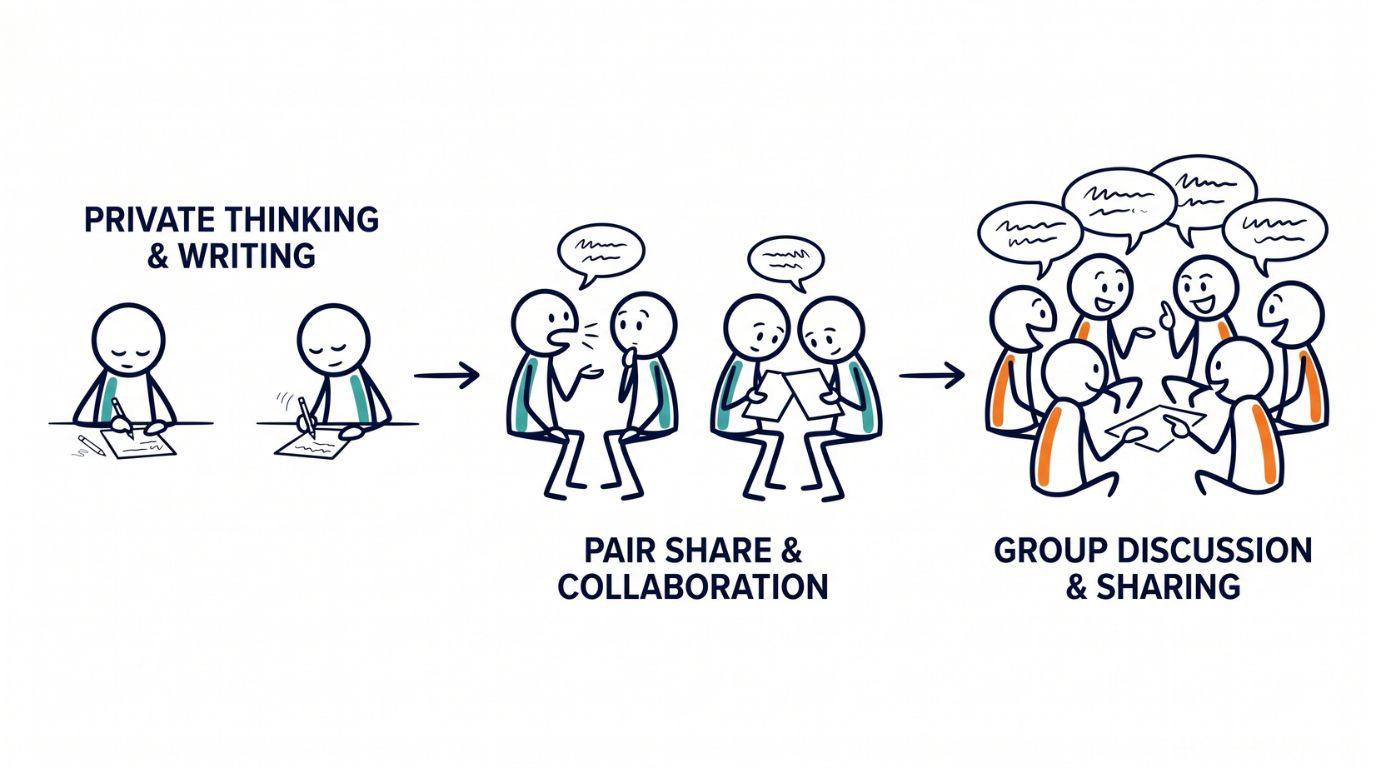
Private to semi-private to public.
Each step raises the exposure level gradually, which means even quiet participants have momentum by the time the full group work starts.
Scale check → “Tell me more about your number” works because the number itself is low-risk (you’re just holding up fingers) but the follow-up question creates genuine conversation.
You pick the interesting scores. “I see some 2s and a couple of 5s. Talk to me about those 2s.”
Now the room is discussing real differences in perception, and you didn’t have to force it.
The key is that each element in the sequence should build on the one before it. If the steps feel disconnected, you’ve done two openers instead of one.
The first five minutes of your workshop are a design decision, not an accident.
Every choice you make in those minutes trains the room.
It tells people whether your session will be something done to them or something done with them.
Whether their experience matters or whether they’re starting from a blank slate.
Whether participation is the default or something they have to volunteer for.
An icebreaker fills the time. A good opener uses it.
No biscuit questions required.
— Nick
One more thing
Starting this week, there’s a paid option on this Substack.
Every post stays free. That doesn’t change. Paid subscribers get Pro access to WorkshopBank.com, plus weekly extras with each post: editable templates, facilitator scripts, scenario walkthroughs, and the design decisions behind each framework.
$15/month or $160/year.
If you’ve been finding these useful, this is the way to go deeper.
Paid subscribers get the extras below: word-for-word facilitator scripts for the hardest opener moments (the flat bold statement, the silent write that confuses the room, the 14 different commitment answers) plus scenario walkthroughs for virtual sessions, large groups, short time slots, and rooms with a dominant senior leader.
If you’re not subscribed yet, you can fix that right here.
