

You’re 40 minutes into a session. The energy is good. People are talking. The framework is landing.
Then someone starts a side conversation. Someone else opens their laptop.
The person in the corner who hasn’t spoken all morning is sinking further into their chair.
And the loudest voice in the room is about to make their fourth point in a row.
You know you need to do something.
But what you say in the next five seconds will either save the session or lose the room.
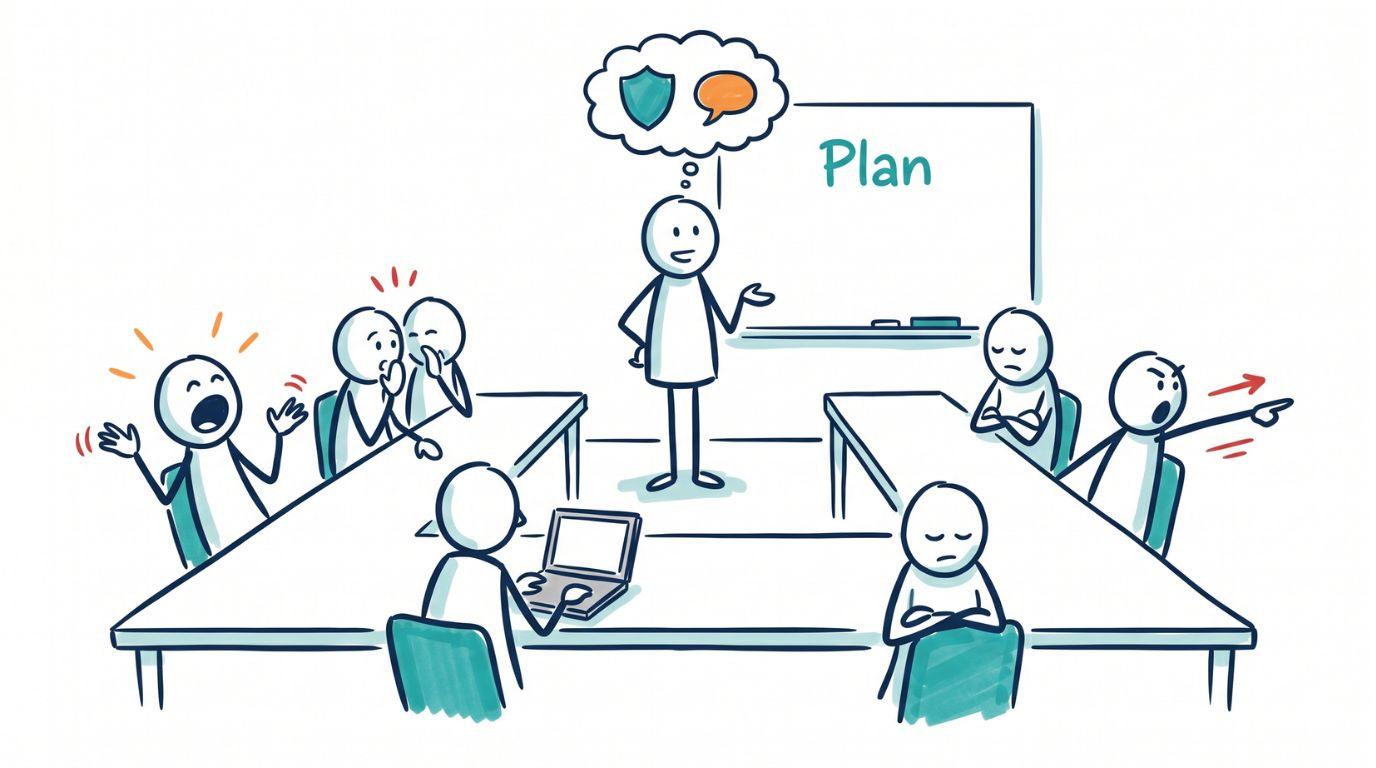
Most facilitators treat moments like these as a problem to solve in real time.
A disruption happens, and they reach for a response. Sometimes it works. Sometimes it makes things worse.
Sometimes they freeze and let the moment pass, hoping it resolves itself.
It rarely does.
The instinct to focus on what to say in the moment is understandable.
When someone is derailing your session in front of 15 people, the pressure is immediate.
You need words. You need them now.
But if the only tool you have is a set of reactive scripts, you’re always playing catch-up.
You’re waiting for things to go wrong and then trying to fix them mid-session, under pressure, in front of everyone.
That’s like showing up to a workshop with no agenda and hoping the conversation goes somewhere useful.
You wouldn’t design a session without a plan. So why would you design your disruption strategy as purely reactive?
The facilitators who handle these moments best aren’t just better at responding.
They’re better at preventing.
They build sessions where most of these behaviours either never appear or lose their power before they start.
And when something does come up (because it will), their response isn’t panicked.
It’s practiced. Calm. Almost invisible to the rest of the room.
That’s the difference.
Not better scripts. Better architecture.
With scripts ready for the moments the architecture doesn’t catch.
The Two Layers
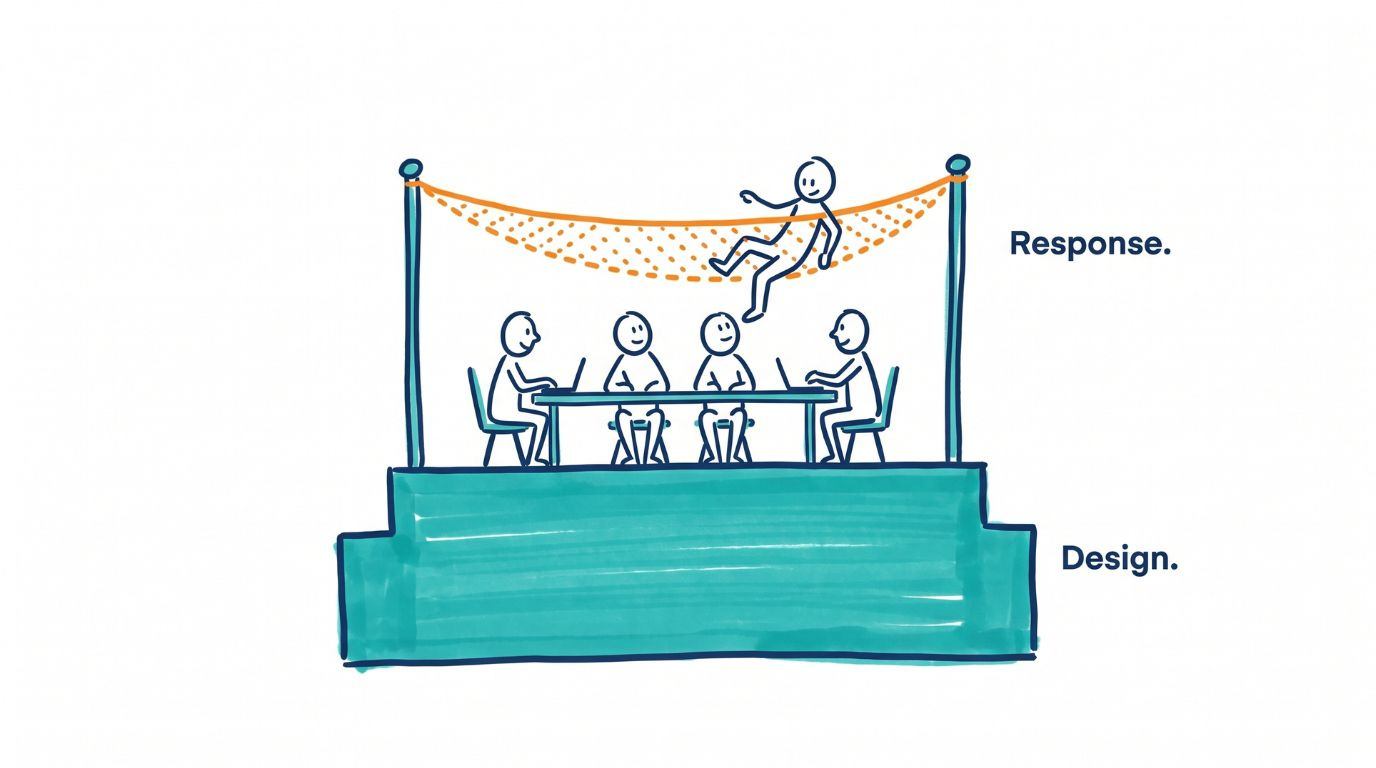
Think of disruption management as two layers that work together.
Layer 1 is prevention
This is your session design, your opening five minutes, your ground rules, and the way you structure activities so that the conditions for disruption don’t exist in the first place.
Layer 2 is response
This is what you say when prevention isn’t enough. The word-for-word scripts, the tone, the body language, and the awareness that what you do to one person, you do to everyone watching.
Most facilitators only have Layer 2.
They skip straight to scripts because that’s what feels urgent.
But Layer 1 is where 70% of the work happens.
Get it right, and you’ll need Layer 2 far less often.
Layer 1: Design the Disruption Out
The best way to handle a derailment is to make it unlikely in the first place.
That doesn’t mean you can prevent every disruption. You can’t.
But you can remove the conditions that create most of them.
Set the contract in the first two minutes
Before any content, before any activity, set the rules of engagement.
Not a slide with “Be respectful” and “Phones on silent” that everyone ignores.
A real contract that the room agrees to together.
Say something like:
“Before we start, I want to agree on three things. First, I own process, you own content. That means I’ll manage the time and structure, and everything we produce comes from you.
Second, one voice at a time. If a side conversation starts, bring it to the group.
Third, we’ll use a parking lot for anything important that’s off-topic, so nothing gets lost.”
Then ask: “Anything you’d add to that list?”
This takes 90 seconds.
What it gives you is permission.
When someone talks over the group later, you’re not policing them.
You’re holding them to an agreement they made.
That’s a completely different dynamic. They agreed to this. You’re just reminding them.
Some facilitators take this further and co-create a full working agreement with the group.
A flipchart where the team writes their own rules for how they’ll work together in the session.
This takes more time (10-15 minutes) but it shifts ownership entirely.
The rules belong to the room, not to you.
When someone breaks them, the group self-corrects because they’re their rules.
Design activities that remove the conditions for disruption
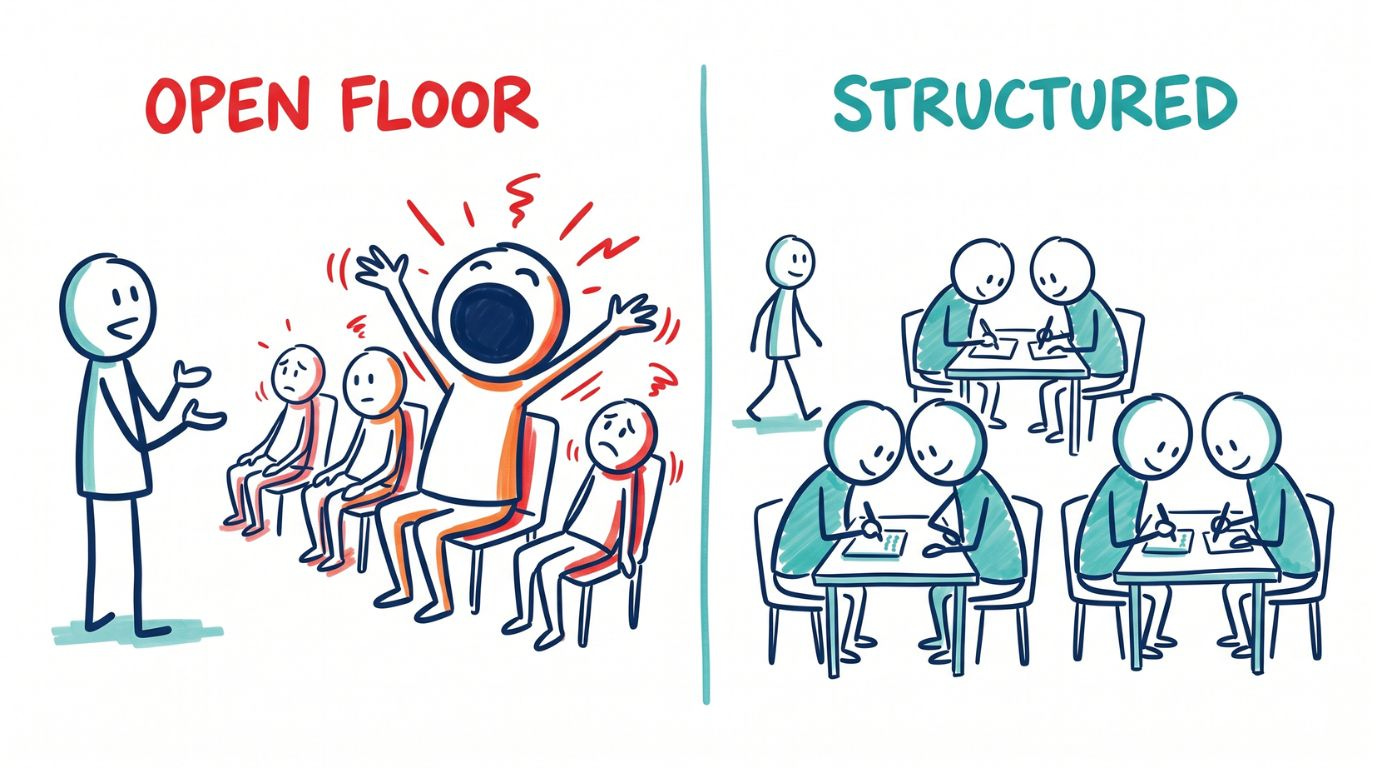
The Dominator dominates because the format allows it.
Open discussion with no structure is an invitation for the loudest voice to fill the space.
If you’re running 20 minutes of unstructured group conversation, you’ve created the conditions for one person to take over.
Replace open discussion with structured rounds.
Give everyone 60 seconds to speak.
Use pair-and-share before opening to the full group.
Have people write their answers individually before discussing.
The Dominator can’t dominate a written round.
The Silent One doesn’t need to be “drawn out” because the format already includes them.
The same applies to the Laptop Opener.
If your session involves long stretches of you talking while participants listen, you’ve created the conditions for someone to check their email.
They’re not being disrespectful. They’re bored. And they’re bored because the design asked them to be passive for too long.
Apply the one outcome per hour rule. Keep activities short. Get people working within the first three minutes.
When participants are actively doing something, laptops close on their own.
Make the purpose visible and constant
The Hijacker takes the conversation off-topic because there’s no visible anchor pulling it back.
If your golden thread is only in your head, the group has no way to self-correct when the conversation drifts.
Write your core question on a flipchart. Put it where everyone can see it. Reference it at every transition.
“Does this connect to our question on the board?”
When someone goes off-topic, you don’t need to say “That’s not relevant.”
You point to the flipchart. The group sees the disconnect themselves.
A visible purpose does the redirecting for you.
Layer 2: When Prevention Isn’t Enough
You’ve designed the session well. You’ve set the contract. Activities are structured. The purpose is visible.
And someone still derails things.
This is normal. No amount of design prevents every disruption.
People bring their own stress, their own agendas, their own personalities into the room.
Layer 2 is for these moments.
The scripts matter. But how you deliver them matters more.
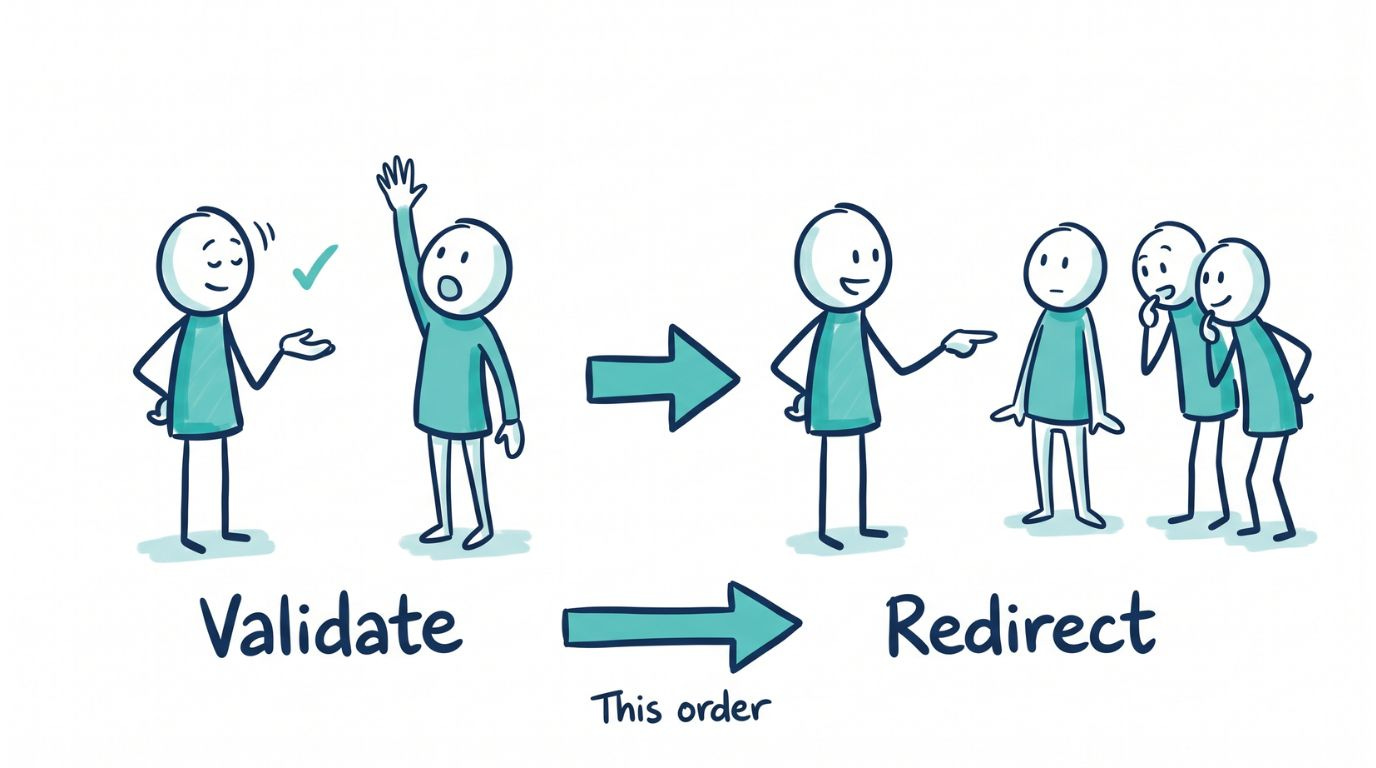
The principle behind every script: validate first, redirect second
Every response follows the same pattern. Acknowledge the person. Then move the room forward. In that order.
If you skip the acknowledgment and go straight to redirecting, the person feels shut down.
They might comply in the moment, but they’ll disengage for the rest of the session.
Worse is, everyone else in the room just watched you dismiss someone.
They’re now thinking: “If I speak up and it’s not what the facilitator wants to hear, I’ll get the same treatment.”
You’ve just made the room less safe for everyone.
If you validate but don’t redirect, the disruption continues.
The group loses focus. And the longer it goes, the harder it is to bring things back.
Both pieces, in that order. Every time.
The Dominator: the most common and the hardest
The Dominator is tricky because they’re often saying good things.
The instinct is to let them finish because the point is relevant.
But every minute they take is a minute someone else doesn’t get.
Your first response: “Strong point. I want to hear how others see it. Who has a different perspective?”
You’ve validated and redirected in one sentence. They feel heard. The room gets space.
If they keep going (and some will), your second response needs to be firmer: “I’m going to pause you there. I want to hear from everyone before we run out of time.”
The key is saying this calmly and with a half-smile.
No frustration. No edge. You’re managing time, not managing them.
The rest of the room should barely notice a shift in tone.
The Side Conversation: generous beats punitive
Two people whispering while the group is working.
The default reaction is either to ignore it (hoping it stops) or to call it out (which embarrasses them).
Instead: “Sounds like a good discussion over there. Want to share with the group?”
This is generous, not punitive.
If the conversation was relevant, you’ve just included it.
If it wasn’t, they’ll stop without being put on the spot. You’ve given them a graceful exit.
The Challenger: capture, don’t debate
When someone pushes back on your framework or your process, the worst thing you can do is argue with them.
Even if you win the argument, you’ve created an adversarial dynamic.
Every future interaction with that person will carry tension.
Instead: “Fair challenge. Let’s capture it on the board. Can we test it against the framework we’re building?”
Their point goes on the board, which means it’s visible, acknowledged, and not going anywhere.
Linking it to the framework keeps the group moving. And you haven’t taken a defensive posture.
If the challenge is about you personally (”I don’t think this approach works”), stay curious: “Tell me more. What’s your experience been?”
Curiosity disarms resistance faster than counter-arguments.
The Silent One: design for them, don’t spotlight them
Calling on a quiet person in front of the group is one of the most common mistakes facilitators make.
You think you’re including them. What you’re actually doing is putting them under a spotlight they didn’t ask for.
They give a half-answer because they’re under pressure, and they shut down further.
Written rounds fix this.
“Everyone take 60 seconds to write your answer. Then we’ll share.”
The quiet person has committed a thought to paper before they have to say it out loud. The pressure drops. They participate on their own terms.
You can take this further.
One technique that works well for groups where people are particularly hesitant: have everyone write anonymously, then pass their paper to someone else.
That person reads the answer to the group. Nobody knows who wrote what. The ideas get heard without any single person being exposed.
This isn’t accommodating shyness.
It’s designing for the full range of how people process and contribute.
Some people think out loud. Some people need to think before they speak.
A good session design serves both.
The Laptop Opener: private, not public
Someone has their laptop open. They’re clearly doing emails, not taking notes.
A public callout will embarrass them and teach the rest of the room that you’re watching and willing to call people out. That’s not the culture you want.
Walk over during the next activity.
Quietly: “Everything alright? Anything I can help with?”
Nine times out of ten, they close the laptop.
You’ve given them a way back in without making it a thing.
If they genuinely need to deal with something urgent, they’ll tell you, and you can say:
“No problem. Step out if you need to. We’ll catch you up.”
The Hijacker: the parking lot is your friend
When someone takes the conversation off-topic, the parking lot gives their point a visible home without derailing the session.
“Important point. I’m adding it to the parking lot. Let’s bring it back to our core question.”
The person sees their contribution captured publicly. They relax.
The group stays on track.
And at the end of the session, you review the parking lot and decide what deserves its own conversation.
One flipchart in the corner of the room, labeled “Parking Lot.”
It takes 10 seconds to set up before the session and saves you from dozens of tangents.
The Part Nobody Talks About: Practice
Knowing the right script is one thing. Delivering it naturally under pressure is something else entirely.
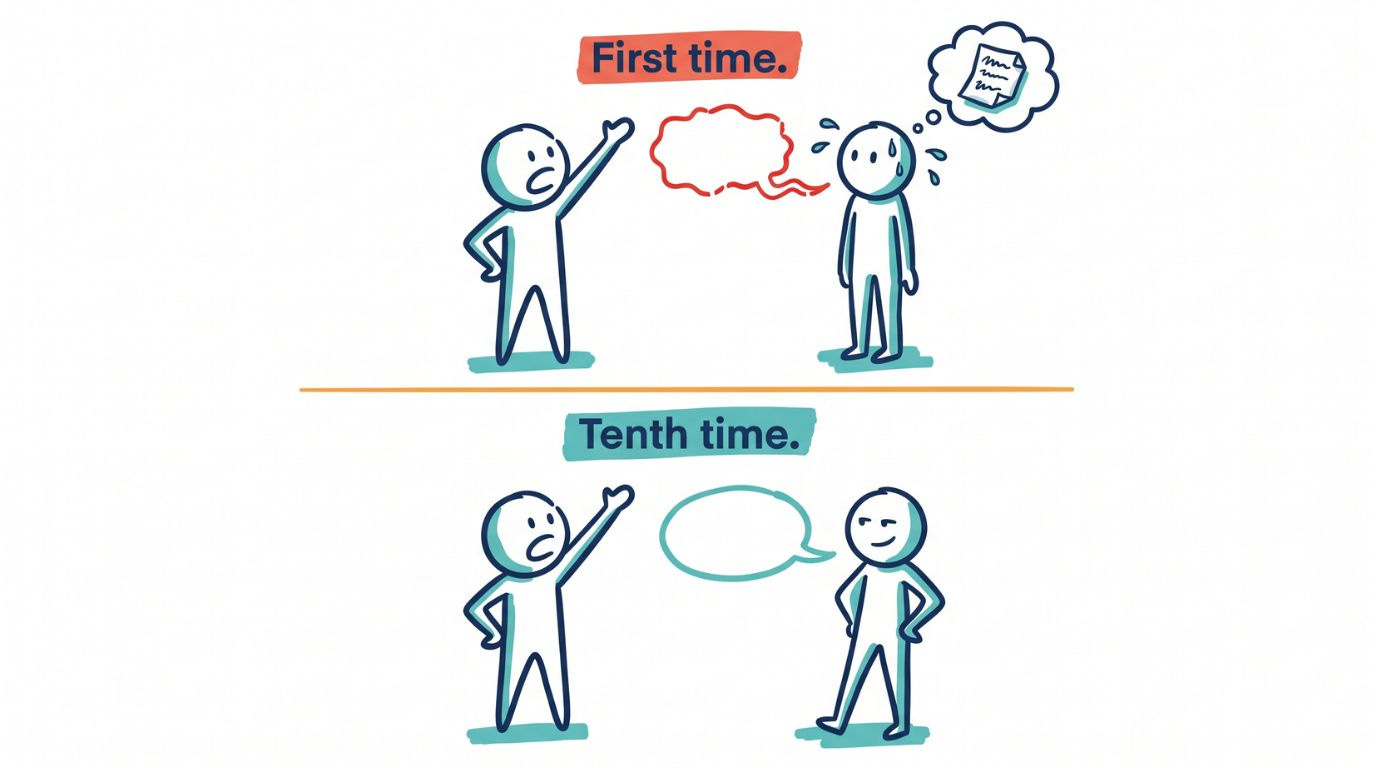
The first time you try “Strong point. Who has a different perspective?” it will sound rehearsed.
You’ll hesitate. You might stumble over the words. The Dominator will sense the hesitation and keep talking.
These scripts need to become automatic.
Not memorised like lines in a play, but internalised so deeply that the right words come out without you thinking about them.
The way you don’t think about the words when you say “Let’s take a five-minute break.” You just say it.
The way to get there is practice before you need them.
Run the scenarios in your head before the session.
Better yet, practise them out loud.
What will you say when someone dominates?
What’s your parking lot line?
How do you approach the laptop opener?
How do you say “I’m going to pause you there” without sounding aggressive?
You don’t want to be spotting a behaviour mid-session and then looking down at notes to work out your response.
That pause, that moment of visible thinking, costs you the room’s confidence.
They need to see someone who is calm, in control, and knows exactly what to do.
That confidence comes from repetition, not from reading a list of tips the night before.
Every Response Teaches the Room
There’s one more thing that changes how you think about these moments.
When you respond to one person’s behaviour, you’re not just talking to that person. You’re talking to everyone.
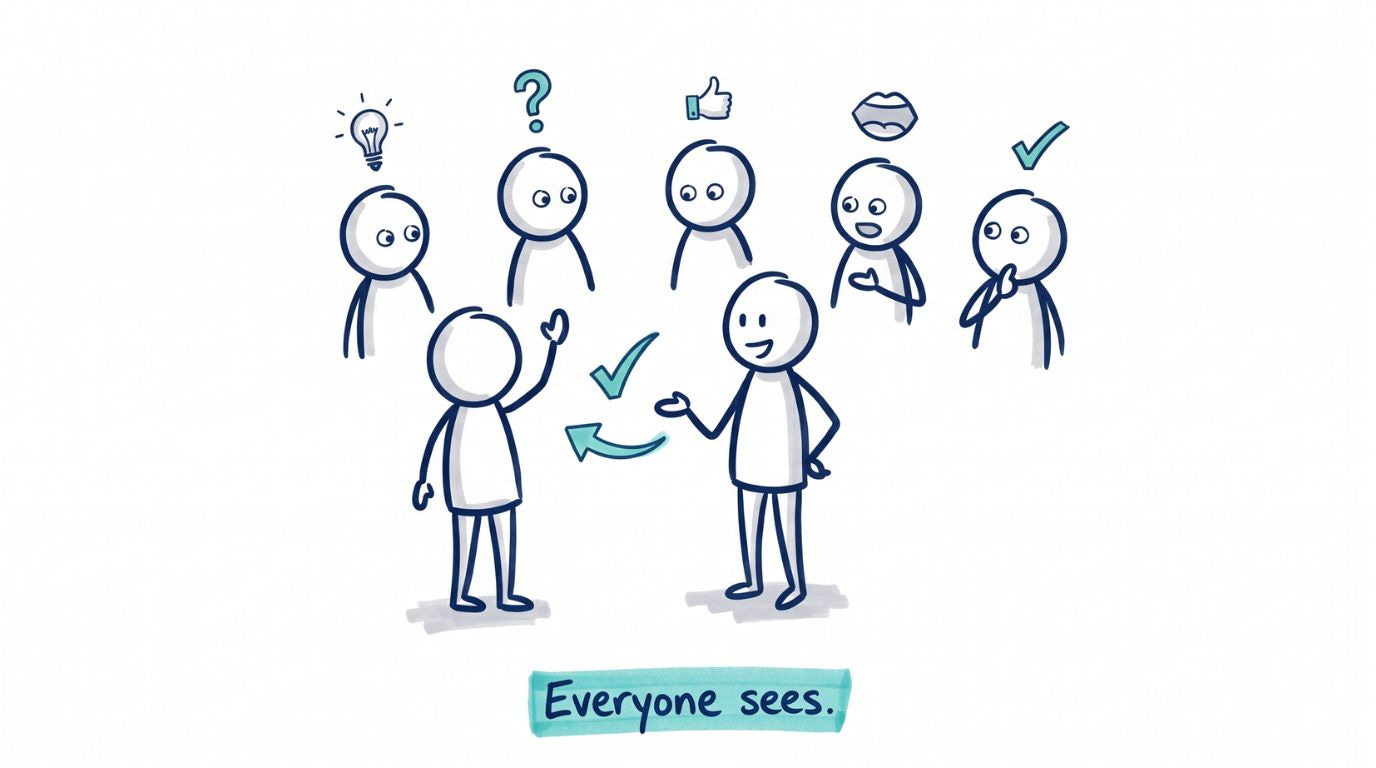
Every person in the room is watching how you handle the Dominator, the Challenger, the Side Conversation.
And what they see teaches them what kind of session this is.
If you embarrass someone, the room learns that participation carries risk.
People will speak less. They’ll hedge their contributions. They’ll play it safe.
If you ignore the behaviour, the room learns that anything goes.
The disruption will escalate because there are no boundaries.
If you validate and redirect with calm professionalism, the room learns that this is a safe space where people are heard, but the process moves forward.
That’s the culture you want. And you build it one response at a time.
This is why the validate-first principle isn’t just good manners.
It’s a strategic choice about the environment you’re creating.
Every intervention is a signal to the room about what’s acceptable and what’s expected.
What This Looks Like in Practice
You’re running a 90-minute strategy session. Twelve people. Mixed seniority.
Before the session, you set up a flipchart with your golden thread question:
“What are the three priorities we’re committing to for Q3?”
Another flipchart in the corner says “Parking Lot.”
In the first two minutes, you set the contract. One voice at a time. Parking lot for off-topic points. “I own the process. You own the content.”
You start with a written round.
Everyone spends two minutes writing their top three priorities individually.
Then pairs. Then the full group.
By the time you open discussion, everyone has already committed their thinking to paper.
The quiet people have something to share.
The dominators have had their say in pairs and are less likely to monologue.
Twenty minutes in, the most senior person starts a tangent about a different initiative.
You say: “Good point. That’s going on the parking lot. Let’s keep our focus on Q3 priorities.”
They nod. The group stays on track.
Thirty minutes in, two people start a side conversation.
You say: “Sounds like you’re onto something. Want to share?”
They do. It’s relevant. You capture it.
Forty-five minutes in, someone challenges the whole premise:
“I don’t think we should be setting priorities when the org structure is changing.”
You say: “That’s a fair challenge. Let’s put it on the board. If the structure change affects which priorities make sense, we’ll factor it in.”
You used the parking lot once.
You redirected a side conversation once.
You captured a challenge once.
None of it felt like conflict.
The room barely noticed the interventions.
That’s what good disruption management looks like.
It’s invisible.
The facilitators who handle difficult participants best aren’t the ones with the sharpest comebacks.
They’re the ones who designed a session where most problems never start, practised their responses until they were automatic, and understood that every intervention is a signal to the whole room.
Scripts are the safety net.
Session design is the balance beam.
You need both.
But if you’re relying on the net more than the beam, it’s not a people problem. It’s a design problem.
If this was useful, forward it to someone who has a workshop coming up this month. And if you’re not subscribed yet, that button is right here. More deep dives like this every week.
I love this!!! All is good and well done and the TRUTH. You were clear, concise and hit the mark. As a Certified Professional Facilitator, you developed a mini master class.